
Fireworks Night
keep your pets safe, calm and comfortable
Why fireworks bother pets
Pets especially cats, dogs and small mammals hear much better than humans and can perceive fireworks as sudden, intense threats. That triggers a “fight, flight or freeze” physiological response (rapid breathing, trembling, racing heart) and can lead to escape attempts, injuries, or prolonged anxiety.
Quick Do / Don’t checklist
Do
-
Keep pets indoors once dusk approaches and during displays.
-
Create a cosy hiding spot (“den”) with familiar bedding, toys, and water — a low-traffic interior room, with curtains closed to block flashes.
-
Add background noise (TV, radio, white noise) at a reasonable volume to help mask bangs.
-
Make evening walks before dark and before fireworks start.
-
Ensure collars fit, ID tags are current and microchip contact details are up to date.
Don’t
-
Don’t tether or leave dogs outside during displays – frightened animals may choke, injure themselves or run away.
-
Don’t force a terrified animal out of a safe hiding place – sit nearby quietly and monitor.
-
Don’t give human sedatives or unprescribed drugs. Always consult your vet first.
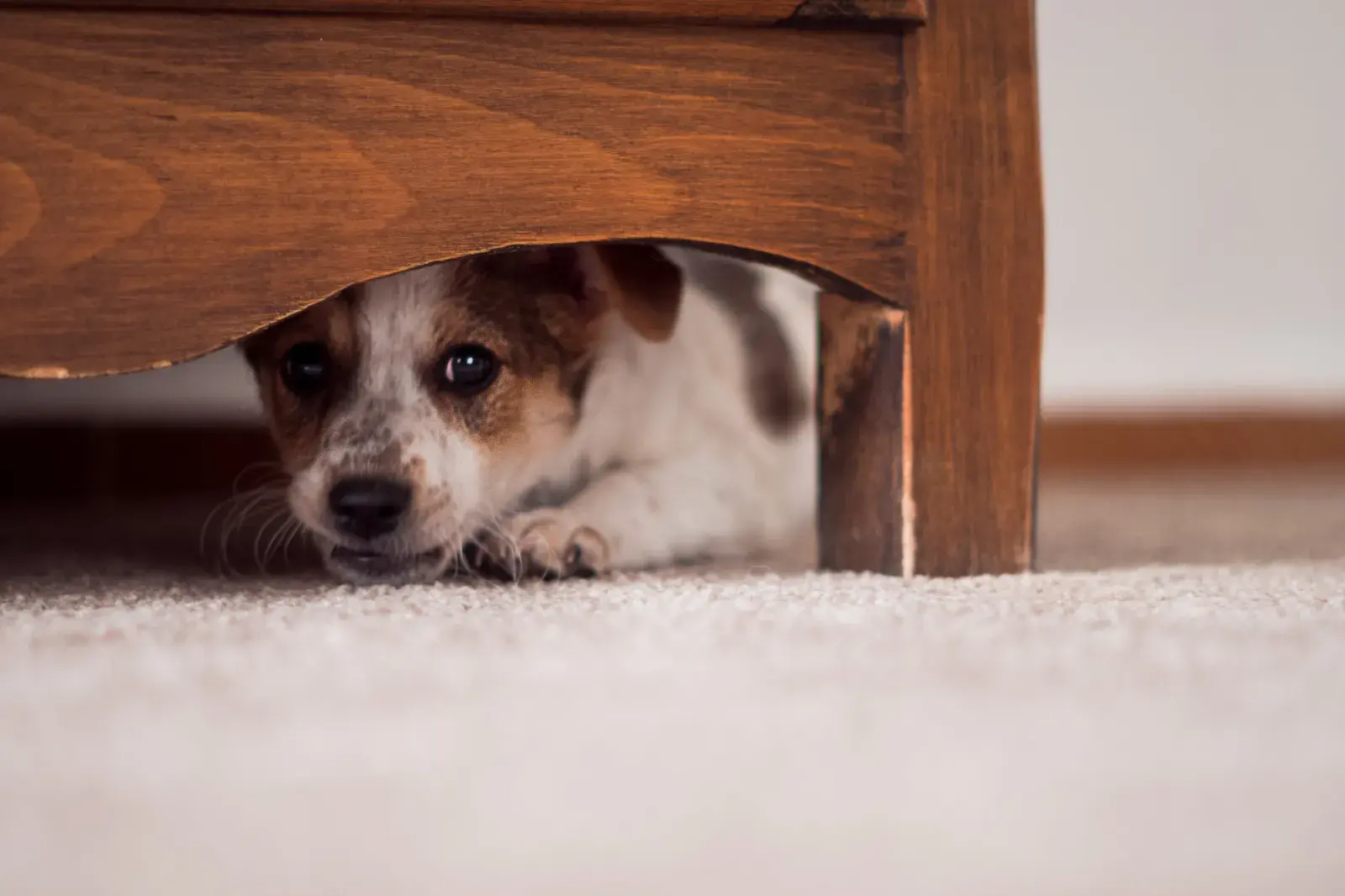

Signs your pet is stressed (watch for these)
Panting, trembling, pacing, drooling, repeated vocalising, hiding, destruction (chewing, scratching), trying to escape, loss of appetite, diarrhoea or vomiting — if these happen, your pet is scared and needs help. If behaviour is extreme (self-injury, collapse, persistent vomiting), contact your vet or emergency clinic.
Prepare before fireworks season (best practice timeline)
Months ahead
Start desensitisation and counter-conditioning: play low-volume recordings of fireworks while pairing with high-value treats and calm play; gradually increase volume over weeks. Evidence shows behaviour modification + meds is most effective long-term.
Weeks ahead
Trial non-drug tools: pheromone diffusers (Adaptil for dogs, Feliway for cats), pressure wraps (Thundershirt), long-lasting enrichment toys. These help some pets but are often supportive rather than curative.
Days ahead
Book a vet consultation if your pet has a history of severe noise fear – discuss prescription options and trial dosing. Always test medications before the event so you know how your animal reacts.
Veterinary prescription options – what your vet may recommend
There is no one-size-fits-all. Options your vet might consider include:
Dexmedetomidine (Sileo®) – an oromucosal gel approved for acute noise aversion in dogs; can be effective when given at the start of or slightly before an event. Good for situational anxiety.
Trazodone, gabapentin, clonidine, benzodiazepines – commonly used alone or in combinations for short-term management or as part of a longer behaviour programme. Trials are often needed to find what works for the individual.
Longer-term drugs (SSRIs, TCAs) may be used to reduce baseline anxiety if noise phobia is chronic – these are started and monitored over weeks.
Important safety notes:
Never use sedatives that only cause immobility without reducing fear – acepromazine is not recommended for noise phobia as it can worsen fear or mask distress. Discuss risks, side effects and interactions with your vet.
Some breeds carry genetic sensitivities (MDR1) – this affects drug choice/dosing.
When to call your vet
Contact your vet urgently if your pet
Has injuring themself, bleeding, collapsed, vomiting continuously, or appears disoriented.
Has ingested fireworks debris or unusual substances (smoke, toxic residues).
Shows severe, unrelenting panic despite at-home measures – your vet can advise immediate options or emergency meds.